
Newsletter Volume 2 No.2 July-August 2026
India is currently experiencing the impact of El Niño, a climate pattern where unusually warm ocean temperatures in the equatorial Pacific shift global rainfall, typically bringing more rain to the Americas while causing deficits in Asia and Australia. In India, this has manifested as a "Super El Niño" event, with scientists warning it could be among the strongest ever recorded.
The dry spell has been severe since June, which recorded rainfall roughly 40% below normal, marking it as one of the driest Junes for the country in a century. The India Meteorological Department (IMD) expects these El Niño conditions to persist through the September monsoon season, raising significant doubts about whether later rains can close the current deficit.
The Ministry of Agriculture has identified 111 high-priority districts across 12 states—including Madhya Pradesh, Maharashtra, Gujarat, Uttar Pradesh, Rajasthan, Karnataka, Bihar, Jharkhand, Telangana, Andhra Pradesh, and Odisha. These districts face two overlapping vulnerabilities: a weak monsoon outlook and irrigation coverage below 25 per cent. This means farmers have little to fall back on if the late monsoon also fails.
In order to reduce misery of farmers, the Governments have issued advisory to farmers to adopt low-water requiring crops like millets, pulses and avoid high water demanding crops like rice and to obtain crop insurance policies. This is also testing time for climate resilient agricultural practices to reduce risk of crop loss.
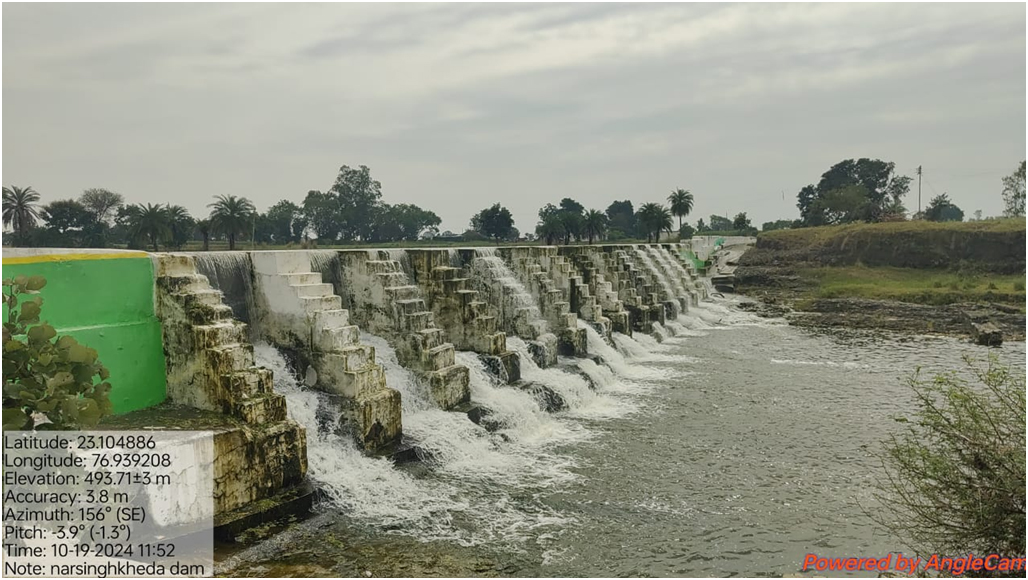
Narsinghkheda village, a revenue village of 360 households, located in the Ichhawar block of the Sehore district in Madhya Pradesh is blessed with the Sukkad River, which is a prominent local waterway in the region that often experiences a significant surge during the monsoon season but was wasted until NCHSE team encouraged the villagers for the construction of a stop dam at Narsinghkheda village. The water user group (WUG) was formed, the group members agree to contributing 25 percent contribution of the total cost of stop dam. WUG actively participated in planning, decision-making, and implementation processes with help of NCHSE team fostering a sense of ownership and ensuring the long-term sustainability of the structure.
The dam was completed in 2006-07 and the scenario with respect to availability of water for irrigation and selection of crops changed, since it directly addressed the region's historical reliance on erratic monsoon rains. The water storage capacity of 1,39,940 cubic meter of the dam helped 150 farming families to irrigate about 244 Ha area out of the total cultivable area of 562 ha. The stop dam is being maintained by the Water User Group (WUG). The WUG collects irrigation fee of Rs 100 per hectare from all beneficiary members. The collected funds are utilized for maintenance activities, such as gate repairs, labour charges etc.
Before the construction of the stop dam, farmers cultivated low-yield crop varieties during the Kharif and Rabi seasons to ensure soil moisture retention for both crops. Water limited for irrigation only 1 to 2 irrigations hence the yields of 2–2.5 quintals per acre of soybean and 8–10 quintals per acre of wheat most farmers grew gram (chickpea) during the Rabi season. After the construction of stop dam farmers shifted to high-yield crop varieties and access to water for irrigation 3 to 4 times. Yields increased to 3.50–6.00 quintals per acre for soybean and 20–24 quintals per acre for wheat. Water availability in the downstream tube wells and open wells extended to April to May.
NCHSE team further encouraged farmers to adopt the climate resilient intervention and diversify to allied activities through linkage with government schemes. Some of the farmers found multiple benefits of adopting animal husbandry to generate additional income from milk production along with agriculture.
Mr. Kishor Singh Verma, a champion farmer of the Narsinghkheda village is one of many examples who with assured water have successfully diversified his farm activities through adoption of 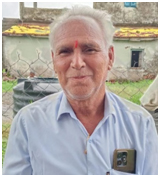 available technologies. Mr. Kishor Singh Verma has 32 acres land. Soybean is the major crop in Kharif (32 Acre) season and rabi season Wheat (15 acre), Bengal gram (5 Acre), Berseem- a fodder crop (5 Acre), garlic (1.5 Acre), Onion (1 Acre). He has also diversified into dairy business. He owns 04 buffaloes with 03 calves and 05 cows with 04 calves. Milk production is around 40 litres/day which he sells in Sachi Milk dairy.
His annual income (profits) from various sources amounts to Rs 17.17 Lakhs which include Rs 12.16 Lakhs from agriculture (Wheat, Soybean & Bengal gram), Rs.1.41 Lakhs from horticulture (Onion & garlic) and Rs 3.60 Lakhs from milk production.
Mr. Nanhe Bhai Bhaiyalal Adivasi, a progressive Marginal farmer from Gram Panchayat Jamuniya, Village Jogidawar in Patera block of Damoh district, has successfully improved his livelihood by adopting hybrid chili cultivation on 0.25 hectare of land. He received training in scientific vegetable cultivation along with technical guidance on modern agricultural practices under collaborative project of ITC Mission Sunehra Kal and RGM, Government of Madhya Pradesh being implemented by NCHSE. He was also introduced to cost-effective cultivation methods through bio-input support, which helped him reduce production expenses while maintaining soil health. By implementing improved practices and receiving regular field-level guidance, he was able to manage his crop more efficiently and achieve better productivity.
He invested approximately ₹20,000 for the cultivation of Chili variety Mahyco Navtej and Mahi 456, the seeds were obtained from progressive farmers of Khargone district. He produced around 15 quintals of hybrid chili, generating a total income of about ₹65000 and earning a net profit of ₹45,000. This transition to hybrid chili cultivation significantly enhanced his income compared to traditional farming practices. The adoption of improved techniques not only increased yield but also improved the quality of produce, resulting in better market prices. Additionally, efficient resource management contributed to reduced input costs and better utilization of available resources. Overall, this intervention has strengthened his economic condition, improved his confidence in adopting modern agriculture, and positioned him as a role model for other farmers in the region who are now motivated to adopt scientific and high-value crop cultivation practices.
"Earlier, we depended on LPG cylinders and firewood for cooking. Today, our kitchen runs on biogas produced from cattle dung, and the slurry has become a valuable organic fertilizer for our fields." This is the story of many rural families in Rajasthan's Kota district whose lives have changed through the adoption of balloon-type biogas plants.
With financial support from MSK Rajasthan, the organization implemented a Biogas and Compost Project under the Climate and Sustainable Action Plan (CSAP) programme across the Sangod, Ladpura, and Digod blocks of Kota district. As part of this initiative, 104 balloon-type biogas plants were installed in rural households, providing families with a clean, affordable, and renewable source of energy while promoting sustainable agriculture.
The project began with community awareness campaigns and hands-on training sessions. Farmers were introduced to the benefits of biogas technology, safe operation and maintenance practices, and the value of using digested slurry as an organic fertilizer. After identifying eligible beneficiaries, biogas plants were installed near their homes, enabling them to convert locally available cattle dung into clean cooking fuel. Cost of each unit is Rs 36500/- out of which only Rs 11250/- is being paid by the beneficiary and Rs 25,000/- is subsidy by the supplier company in the form of carbon credit.
Each balloon-type biogas plant, with a capacity of 2–2.6 cubic metres, requires approximately 25–30 kilograms of cattle dung per day, mixed with an equal quantity of water to form a slurry. Inside the anaerobic digester, naturally occurring microorganisms break down the organic matter to produce methane-rich biogas, which is stored in a flexible balloon and supplied directly to the kitchen through a pipeline. The digested slurry flows out of the system and serves as a nutrient-rich organic manure for agricultural fields.
The plants generate approximately 1.5–2 cubic metres of biogas per day, sufficient for 1.5 to 2 hours of daily cooking for an average rural household. As a result, the consumption of firewood has declined by 60–80 percent, significantly reducing indoor smoke and dependence on traditional fuels. Families that previously relied on LPG have also reported considerable savings, with an average reduction of around ₹1,100 per month in cooking fuel expenses.
The benefits extend well beyond clean energy. The nutrient-rich slurry has improved soil fertility and enhanced crop productivity while reducing the use of chemical fertilizers. Farmers cultivating paddy and wheat have reported savings of approximately 100 kilograms of DAP fertilizer per hectare, lowering cultivation costs and promoting healthier soils.
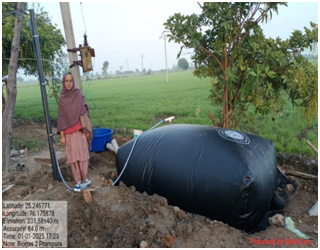
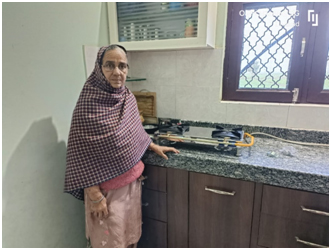
The initiative has also delivered important environmental gains. By capturing methane that would otherwise escape into the atmosphere, the biogas plants help reduce greenhouse gas emissions. Lower firewood consumption contributes to reduced pressure on forests, while scientific management of cattle dung and organic waste has improved sanitation in villages. Increased use of organic manure has further reduced dependence on chemical fertilizers, supporting climate-resilient and environmentally sustainable farming practices.
A key feature of the project is its innovative financing model. Through a carbon credit mechanism, each beneficiary farmer receives a subsidy of ₹25,000, reducing the farmer's contribution to only ₹11,250 per biogas plant. This has made clean energy technology affordable and accessible for rural households.
The Balloon Biogas Project demonstrates how a simple, locally appropriate technology can address multiple challenges simultaneously—clean energy access, waste management, sustainable agriculture, climate change mitigation, and improved rural livelihoods. By converting waste into valuable resources, the initiative is helping rural communities move towards a cleaner, greener, and more self-reliant future.
Mrs Krishna Bai, a resident of Siradi village, Block-Ichhawar, District-Sehore, is a housewife, a Krishi sakhi under the ITC MSK programme being implemented by National Centre for Human Settlements & Environment (NCHSE) and a Member of Aajivika Park Bhaukhedi. She is having 6 members in the family. Her family has a total land holding of 3 acres out of which only 1 acre is irrigated which is not sufficient for their livelihood.
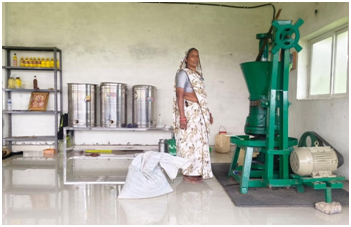
Mrs Krishna Bai was selected as a trainee Krishi Sakhi under the programme, which enabled her to learn about sustainable agriculture practices. While imparting her duties as a Krishi Sakhi helping others to adopt climate smart agricultural practices, she became aware that rather than fully dependent on agriculture she should diversify her activities for additional income. Under the programme she was linked to the NRLM where she learnt about the PMEGP (Prime Minister Employment generation programme). She applied for support under Micro project on "Kacchi Ghani Mustard Oil Mill". Narmada Jhabua Gramin Bank sanctioned her Rs 2.5 lakhs as seed money for the procurement of machine and starting her business. The sanctioned amount constitutes Rs 1.675 Lakhs as loan and the remaining Rs 82,500 (33 %) as subsidy. She has to pay back the loan component and the interest @ Rs 3,500 per month after a grace period of six months. She has started the Mill in the month of August 2025. Within a month she could produce 200 Liters of Oil (Mustard and Ground nut oil) and sold 70 Liters of oil earning gross amount of Rs 15,700. She procures organically produced oil seeds as the raw materials. She is trying to get her enterprise registered in the name of Krishna Aajivika and get certification of FSSCI and other agencies as quality organic product. NCHSE team is providing hand holding support for branding, marketing and publicity through social networks. There is demand for her product. It is a matter of time when Mrs Krishna Bai would become debt free and venture into expansion of her business.
Nitheshnimal Sadasivam et.al. (2025) in their new study report published in the journal Nature Sustainability on October 28, 2025 have highlighted significant land subsidence in major Indian cities, affecting over 13 million buildings and nearly 80 million residents. The analysis used satellite radar data from 2015-2023 to estimate differential settlements in five fast-growing Indian megacities — Delhi (National Capital Territory, NCT), Mumbai, Kolkata, Bengaluru and Chennai.
Widespread subsidence was found in all cities, with maximum rates of 51.0 mm yr−1, 31.7 mm yr−1, 26.1 mm yr−1, 16.4 mm yr−1 and 6.7 mm yr−1 for Delhi, Chennai, Mumbai, Kolkata and Bengaluru, respectively. The study cautioned that besides extensive groundwater extraction through millions of unregulated bore wells, Indian megacities may also experience subsidence due to the cumulative weight of the urban structures above.
Cities globally are sinking due to heavy concretisation and urban sprawl. When natural soil is paved over with concrete, rainwater cannot seep into the earth to naturally replenish underground aquifers. Combined with massive groundwater extraction, this causes the soil beneath to compact and the land surface to sink (land subsidence).
Sinking land worsens the impact of climate change and rising sea levels. As a city sinks closer to (or below) sea level, drainage systems fail because gravity-based runoff cannot flow outward. Consequently, inland flooding and waterlogging occur during heavy rains, even when overall rainfall levels remain the same. They study highlighted the need for adopting mitigative and adaptation strategies like:
Under the Small Grants Programme (SGP)-TERI Project being implemented in Tendukheda Block of Damoh district, Madhya Pradesh, NCHSE organised a Capacity Building Programme on Climate-Resilient Agricultural Practices for the Kharif Season at Krishi Vigyan Kendra (KVK), Damoh, in June 2026. Forty farmers from Deori Liladhar and Patloni villages participatory preparatory to kharif crop sowing.
With the support from TRAI, New Delhi, NCHSE, organized a Consumer Awareness Programme (CAP) on 4 July 2026 at Sandipani Government Excellence Agriculture Higher Secondary School, Rehli, District Sagar, Madhya Pradesh. NCHSE continues to strengthen digital literacy, consumer protection, and informed decision-making among rural communities.
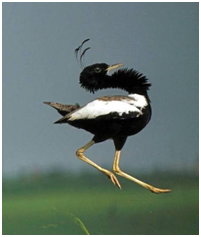
Status: Critically Endangered (IUCN Red List)
Habitat: Dry grasslands of Gujarat, Rajasthan, MP, Maharashtra
Threat: Monoculture, pesticides, vanishing grassland habitat
The lesser florican, also known as the Likh or Kharmore, is the smallest in the bustard family and the only member of the genus Sypheotides. It is endemic to the Indian Subcontinent where it is found in tall grasslands and is best known for the leaping breeding displays made by the males during the monsoon season.
As per a study jointly conducted by the BNHS, WII and Forest Departments of the States in 2017, the population of the species was estimated to be 340, with a conservative estimate of 264 individuals that indicates ~80% population decline in last 3–4 generations (since 2000).
We thankfully acknowledge the support received from ITC Ltd, TRAI & SGP-TERI for the implementation of the projects.
Editors: Dr. Pradip Nandi & Dr. Lokendra Thakkar Published by: National Centre for Human Settlements and Environment (NCHSE), E-5/A, Girish Kunj, Arera Colony, Bhopal - 462016 (M.P.) Email: nchsebpl@gmail.com, Website: www.nchse.org |
Copyright © 2025 NCHSE. All rights reserved.
Disclaimer: The information provided on this Newsletter is for general informational purposes only. NCHSE assumes no responsibility for errors or omissions in the content or for any actions taken based on the information provided. |